
Search St. Louis City Court Records First
The first public search path for St. Louis City County court records is Missouri Case.net. Case.net is the statewide case search system for Missouri circuit courts, and the St. Louis City Municipal Court also points current and pending municipal citations and court dates to Case.net. The city specifically says Municourt.net is no longer available for St. Louis City Municipal Court cases, so older bookmarks to that system should not be used as the main court records search path.
Case.net is useful when the case is public and indexed. It may not supply every filed document, and it is not a certified copy source. Older case files, sealed matters, misindexed records, probate source papers, and copy requests still route to the St. Louis Circuit Clerk, the Probate Division, or the Municipal Court window. The strongest search starts with the case number if known. Name searches work, but spelling, former names, business names, and St. Louis City versus St. Louis County venue can change the results.
- Open Case.net and choose the search path that matches the information available, such as case number, litigant name, filing date, scheduled hearings, or judgment index.
- Enter the exact St. Louis City case number when possible. Local case numbers often begin with a 22SL prefix and case type letters.
- If the case number is not known, search by party name, then compare court, city, division, filing date, and case type before relying on a match.
- Open the public case detail and review the docket entries, hearing dates, parties, disposition, and financial entries that appear.
- Request certified or non-certified copies from the Circuit Clerk when a court-stamped copy or a document not shown online is needed.
St. Louis City Court Records Search Fields
Case.net offers several search doors because St. Louis City County court records are not all found from one field. A case number search is best for a known file. A litigant name search is better when the user only has a person or business name. Filing date and scheduled hearing searches help with recent filings and docket checks. Payment and tracking tools may appear after a case is found, but they do not replace a clerk copy request.
| Field Label | Type | Required | Notes / Format |
|---|---|---|---|
| Search for Cases by Case Number | Tab and text field | No | Use when the exact case number is known, such as a 22SL-CR, 22SL-AC, 22SL-CC, or 22SL-PR style number. |
| Litigant Name Search | Tab and text field | No | Searches party names when the case number is not known. Check spelling and former names. |
| Filing Date Search | Tab and date range | No | Useful for recent St. Louis City court records and newly filed matters. |
| Scheduled Hearings and Trials Search | Tab | No | Used for court date and docket lookup rather than full document review. |
| Judgment Index | Tab | No | Focuses on judgment records rather than every docket event. |
| Pay By Web | Link or button | No | Routes eligible payment matters to the state payment system. |
| Track This Case | Result action | No | Allows eligible case alerts through email or mobile notice options. |
The Missouri Attorney General publishes a useful Sunshine Law reference for public access. The captured source image came from the Missouri Attorney General Sunshine Law overview, which explains the statewide public-records framework that sits beside court access rules.
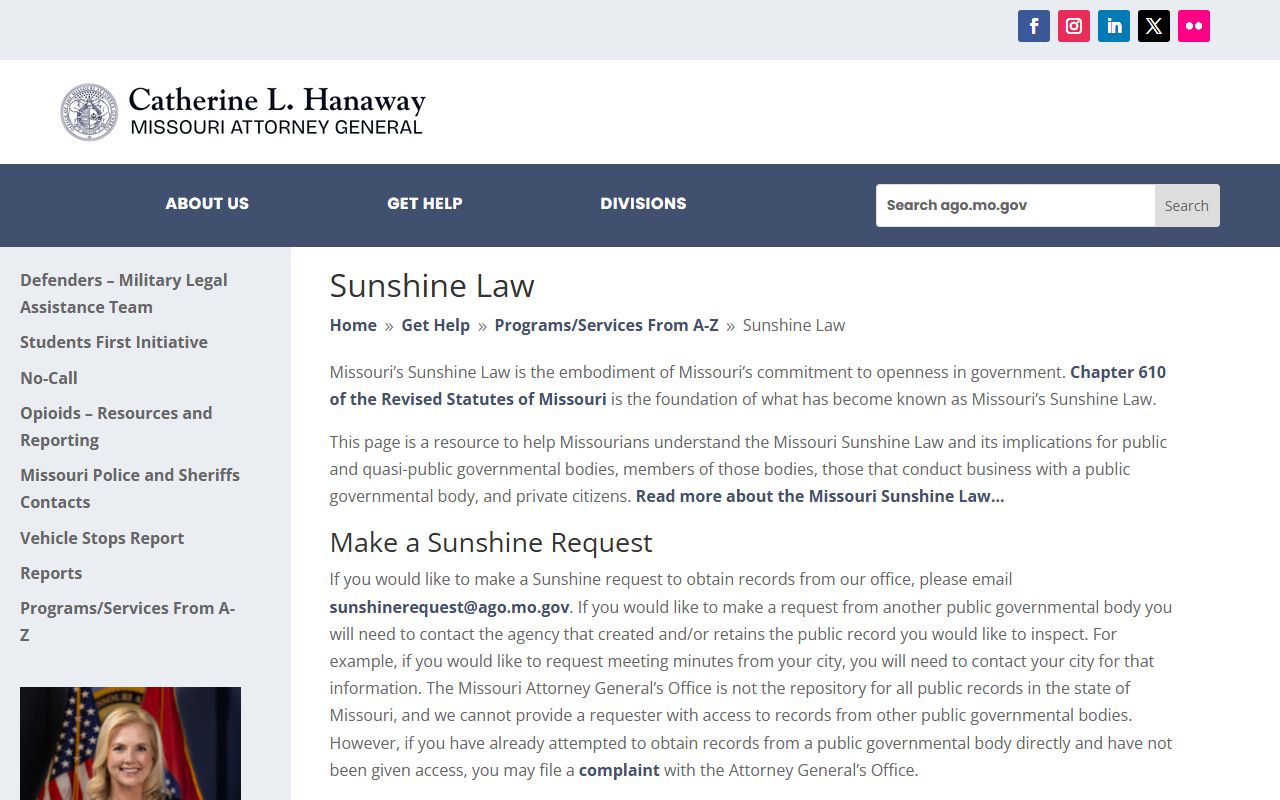
That state overview helps explain why a public search may still need a custodian request when the record is held by an office rather than displayed in a case portal.
Types of St. Louis City Court Records
St. Louis City County court records cover more than one case class. The 22nd Judicial Circuit holds civil, criminal, family, probate, associate circuit, and related court filings. Municipal Court handles many ordinance and traffic matters and now routes current or pending citation searches through Case.net. Probate records can be public in Case.net, but older estates and guardianships may require the Historical Probate Case Index or a Probate Division request.
Marriage records are a separate example of why the office matters. The Recorder of Deeds and Vital Records Registrar handles St. Louis City marriage licenses and marriage copies, while divorce case files and certified divorce decrees are Circuit Clerk records. Police incident reports, city agency records, and Medical Examiner records do not become court records just because they involve a legal issue. Those requests use the creating agency or the city GOV/QA Sunshine process.
- Civil records include petitions, answers, motions, summons returns, orders, judgments, garnishments, executions, and appeals.
- Criminal records include complaints, informations, indictments, charge amendments, bond entries, pleas, verdicts, sentencing, warrants, and costs.
- Family records may include divorce, custody, paternity, child support, and protection order entries, with limits for private details.
- Probate records cover estates, wills, guardianships, conservatorships, disabled adult matters, and minor estate files.
- Municipal records cover many traffic citations, ordinance violations, municipal warrants, payment entries, and court dates.
- Juvenile records are handled in the Family Court and Juvenile Division and are not open like ordinary adult case files.
What St. Louis City Court Records Show
A public case result is a map of a court file, not always the whole file. St. Louis City County court records often show the case number, caption, court, division, filing date, status, parties, lawyers, docket entries, hearings, dispositions, and financials. In criminal and traffic matters, a public record may also list charges, count numbers, statute or ordinance references, bond, warrant entries, fines, costs, restitution, and sentence details if entered by the court.
| Field | What It Shows |
|---|---|
| Case Number | The 22nd Judicial Circuit identifier, often with 22SL and case type letters such as CR, AC, CC, or PR. |
| Caption or Style | The case name, such as State of Missouri v. a defendant or plaintiff v. defendant. |
| Court and Division | The circuit, division number, judge or commissioner, courtroom, or floor when public. |
| Parties and Attorneys | Names of parties, prosecutors, defense counsel, civil attorneys, or guardians ad litem where public. |
| Docket Entries | Filings, notices, hearings, warrants, motions, continuances, pleas, orders, judgments, and sentence events. |
| Financials | Court costs, fines, bond, restitution, balances, and payment plan entries when shown. |
| Documents | Public filing references. Downloadable documents depend on access rules, eFiling status, and restrictions. |
St. Louis City court records should be read with care. A docket line can show a charge, motion, or warrant event before the case is final. For the charge and sentence details in a criminal case, the focused St. Louis City criminal court records resource is the better next stop.
Public Access to St. Louis City Court Records
Missouri public access begins with open-records principles, but court records also follow court rules and sealing orders. Missouri Sunshine Law Chapter 610 sets the state framework for public governmental records. RSMo 610.010 defines public records and public governmental bodies, while RSMo 610.023 requires public bodies to make records available and designate a custodian.
The Missouri Sunshine Law source image came from the official Chapter 610 statute page. It is relevant because St. Louis City County court records, city agency records, and law enforcement records can follow different request channels even when all are public records in a broad sense.
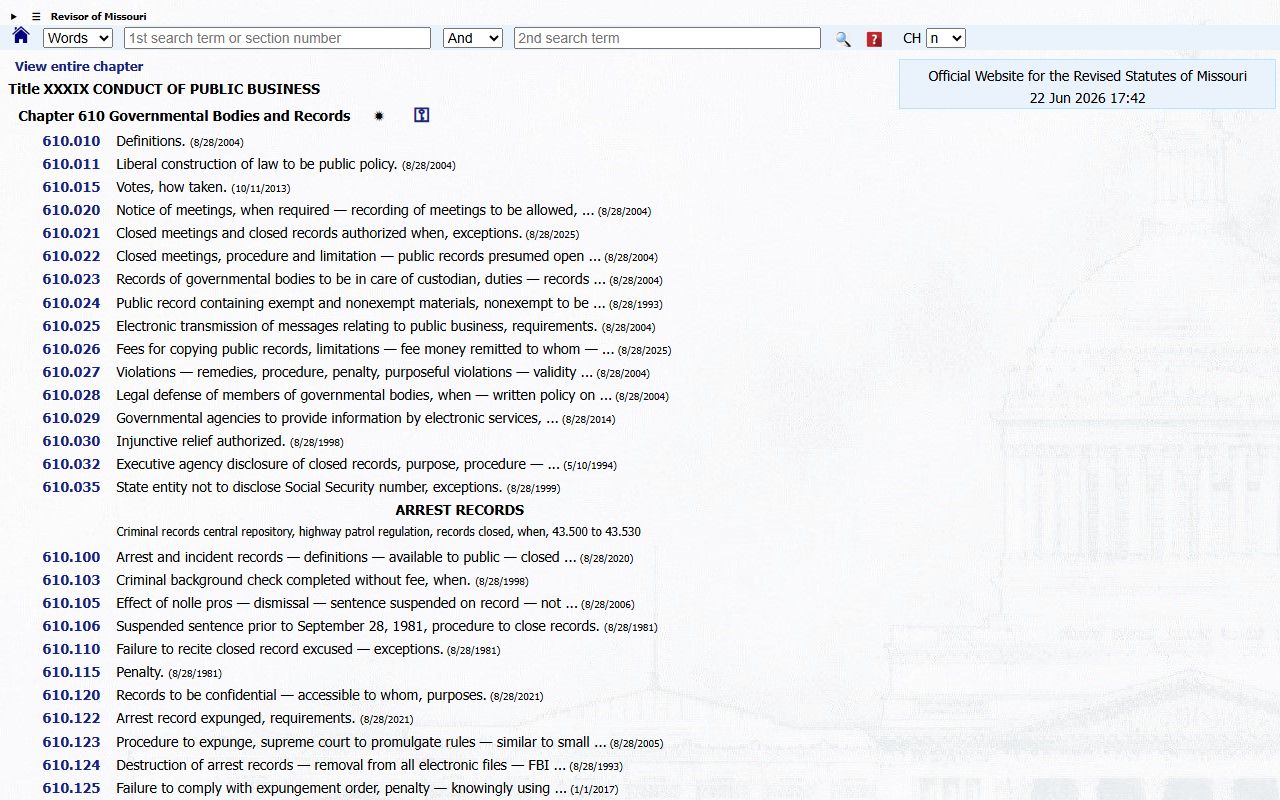
For court case documents, the Circuit Clerk and court instructions are the better source than a general city request portal. For city departments, SLMPD, the Medical Examiner, or SLDC, the city GOV/QA process may apply instead.
Note: A public docket entry is not the same as a certified copy from the Circuit Clerk.
Restricted St. Louis City Court Records
Not every court record is public. Juvenile matters are restricted by RSMo 211.321 and court orders. Adoption records, mental health proceedings, confidential addresses, personal identifiers, medical details, and sealed or expunged cases are not treated like ordinary public dockets. Missouri court access rules also require filers to protect sensitive information before filing documents.
Criminal records can become closed after certain outcomes. RSMo 610.105 covers closed records after nolle prosequi, dismissal, or acquittal in criminal cases. RSMo 610.122 and RSMo 610.140 address arrest and conviction expungement. If a St. Louis City case disappears from public search, the cause may be a sealing order, expungement, juvenile status, wrong venue, or an older file that needs clerk help.
| Record Limit | Practical Meaning | Likely Access Path |
|---|---|---|
| Juvenile case | Not open like adult civil or criminal cases. | Juvenile Division or court order. |
| Expunged arrest or conviction | Public access is limited after a qualifying court order. | Statute and court clerk guidance. |
| Personal identifiers | SSNs, account numbers, minor names, and confidential addresses should be redacted. | Public docket may omit or mask details. |
| Older probate files | Some historical entries are indexed separately. | Probate Historical Probate Case Index or Probate Division request. |
St. Louis City Court Copy Requests
Certified and non-certified copies of public St. Louis City County court records go through the Circuit Clerk's copy process. The 22nd Judicial Circuit says users may email certified copy requests, then a Certified Copies Department member responds with an estimate and payment instructions. Law firms may establish accounts through the cashier's office. The court does not publish a complete per-page copy fee in the captured public text, so copy cost should be treated as estimate-required.
The official 22nd Judicial Circuit public records instructions distinguish court document requests from broader city Sunshine requests. News media seeking court records under Missouri Sunshine Law may use the court's communications path. Citywide agency requests, by contrast, use GOV/QA for departments such as the City of St. Louis, Medical Examiner's Office, SLDC, and SLMPD.
The public-record custodian statute image came from RSMo 610.023. It supports the point that the right custodian matters when a record is not retrievable from Case.net.
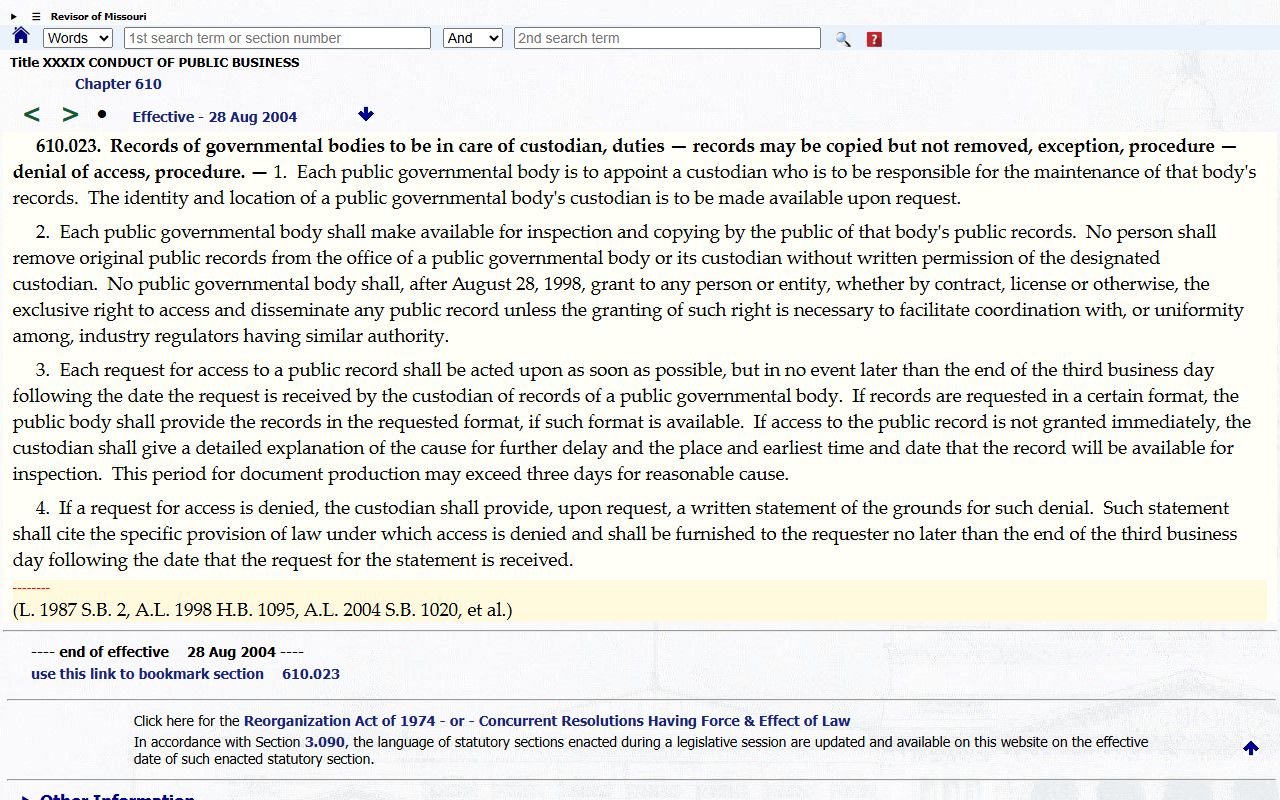
A good request identifies the case number, party names, document title, filing date if known, and whether a certified copy is needed. Screenshots are not a substitute for clerk authentication.
St. Louis City Court Records Offices
In-person court record help is split by record type. Circuit court records center on the downtown 22nd Judicial Circuit complex. Municipal tickets and ordinance cases go to Municipal Court. Probate questions go to the Probate Division on the 10th floor of the Clyde S. Cahill Courts Building. St. Louis City records should not be routed to St. Louis County in Clayton unless the case is actually a county case.
Circuit Clerk, 22nd Judicial Circuit
Clyde S. Cahill Courts Building
10 North Tucker Boulevard
St. Louis, MO 63101
314-622-4500
St. Louis City Municipal Court
1520 Market Street, Suite 1120
St. Louis, MO 63103
314-622-3231
Monday-Friday, 8:00 AM to 5:00 PM except city holidays
Missouri Sunshine Law definitions were captured from RSMo 610.010, which helps separate the public-record concept from the narrower question of which office keeps the file.
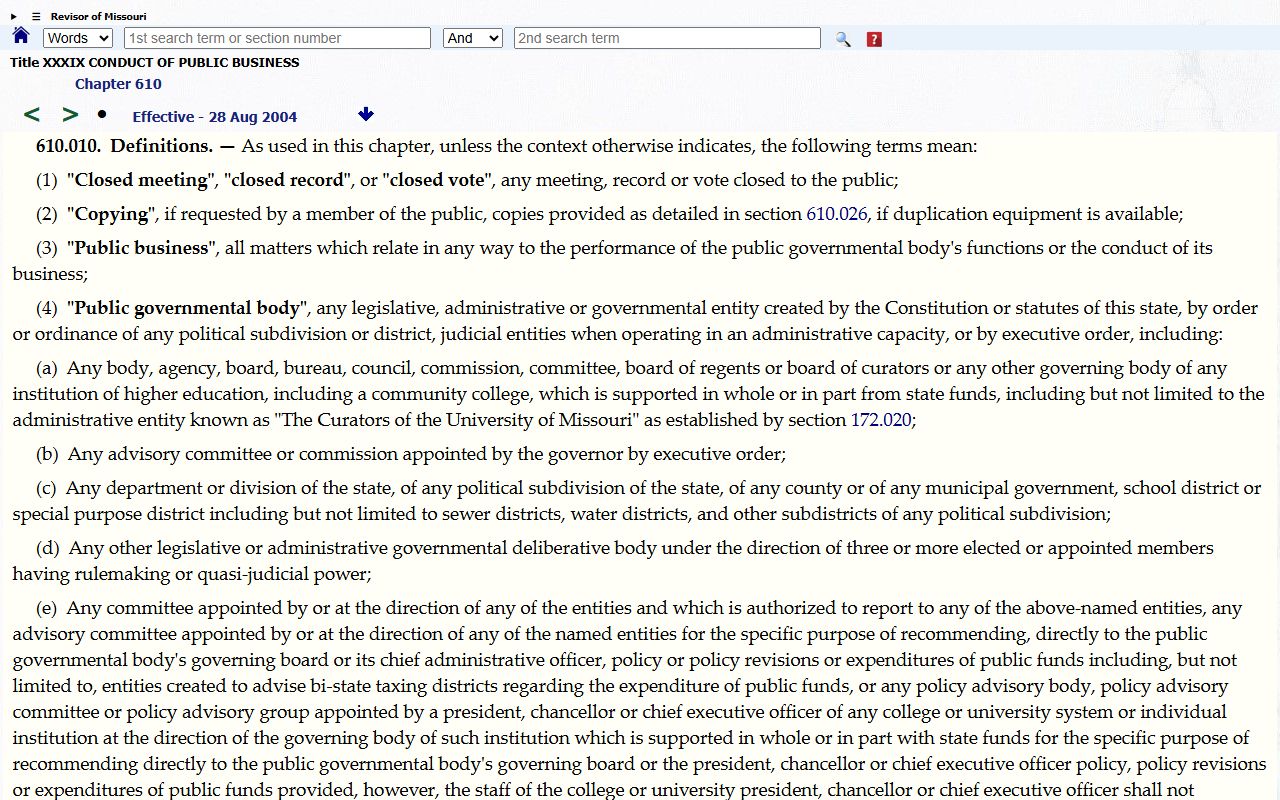
Before visiting, bring a photo ID, case number, party names, and enough detail to identify the file. For certified copies, wait for the clerk's estimate and payment instructions when the request is submitted by email.