
Search St. Louis City Traffic Records
St. Louis City Municipal Court handles many municipal ordinance and traffic citation matters. The court is located at 1520 Market Street, Suite 1120, St. Louis, Missouri 63103, phone 314-622-3231, email stlccweb@stlouis-mo.gov, and regular hours are Monday through Friday, 8:00 AM to 5:00 PM except city holidays. The municipal homepage includes Make a Payment, Search Case/Court Date, View Court Calendar, and Virtual Court.
The city citation search instructions say Case.net is now the searchable database for current or pending citations and court dates. Municourt.net is no longer available for St. Louis City Municipal Court cases. Chrome and Edge are the preferred browsers named in the research.
- Open the St. Louis City Municipal Court case-search instructions and follow the Case.net route.
- Search by citation or case number first when that number is available.
- Use litigant or defendant name search only when the citation number is unknown.
- Review court date, charge, plea, disposition, payment, and warrant entries.
- Use Pay By Web only if the case is eligible, or contact Municipal Court when an appearance is required.
The official payment source explains the local traffic ticket path for guilty pleas without a court appearance.
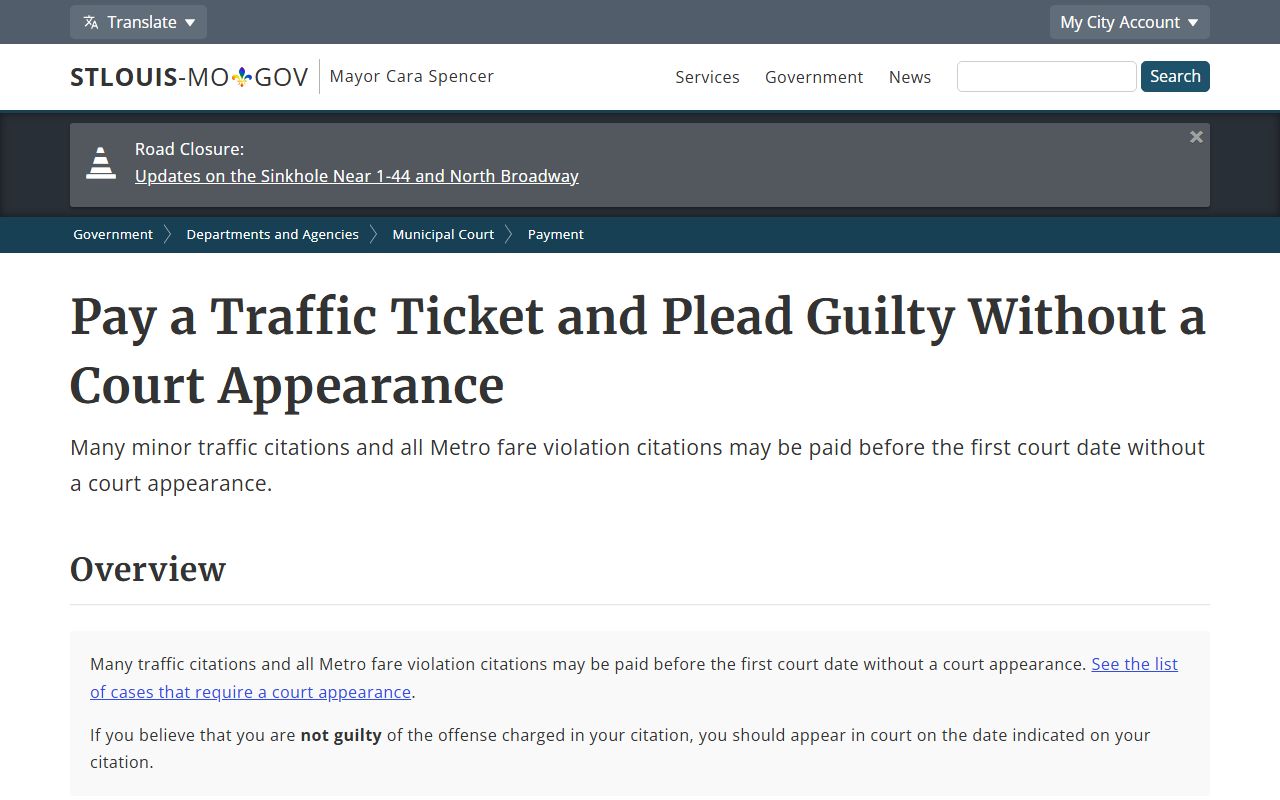
That source matters because payable traffic tickets and appearance-required citations do not follow the same court workflow.
St. Louis City Citation Lookup Fields
The St. Louis City traffic court record search uses Case.net style fields. Citation number is the cleanest path because it points to the exact ticket. A name search may pull unrelated city cases, older circuit cases, civil matters, or a person with the same name.
| Field Label | Type | Required | Options / Format Notes |
|---|---|---|---|
| Case Number / Citation Number | Text | Optional path | Best for exact ticket lookup. |
| Litigant / Defendant Name | Text | Optional path | Use if citation number is unknown. |
| Court date search | Search tab | Optional | Confirms docket dates and scheduled hearings. |
| Pay By Web | Button or link | Optional | For eligible payable cases only. |
| Track This Case | Result action | Optional | May provide alerts when available on the case. |
The city Case.net migration is a key local traffic records fact: do not search Municourt.net for current St. Louis City municipal cases.
St. Louis City Traffic Court Venue
Most city traffic and ordinance citations route through St. Louis City Municipal Court. More serious state-level charges, including some DWI matters, can become criminal cases in the 22nd Judicial Circuit. That court split matters because a payment question, a warrant recall, and a full criminal case record may sit in different places.
| Court or Agency | Traffic Role | Contact |
|---|---|---|
| St. Louis City Municipal Court | Municipal ordinance citations, many traffic tickets, Metro fare violation citations, payments, continuances, and municipal warrants. | 1520 Market Street, Suite 1120; 314-622-3231 |
| 22nd Judicial Circuit | State criminal cases and circuit files when a traffic event becomes a state criminal matter. | Clyde S. Cahill Courts Building and Mel Carnahan Courthouse |
| Missouri DOR | Driver record, license history, points, and suspension records. | Online, license office, mail, email, or fax request options. |
St. Louis City is independent from St. Louis County. A Clayton court or county driver search does not replace the city municipal traffic case path.
St. Louis City Traffic Record Fields
A traffic court record is a case file or docket entry, not the same thing as the state driver history. The court record is where citation status, court dates, pleas, fine entries, disposition, and failure-to-appear activity appear. Case.net may also show judge, division, case status, and payment plan details where public.
| Field | What It Shows |
|---|---|
| Citation or case number | The unique court number used for search, payment, and court contact. |
| Charge or ordinance | The traffic allegation, municipal ordinance, or state charge listed in the case. |
| Court date | Scheduled appearance, hearing, or compliance date. |
| Plea | Guilty, not guilty, or other plea entry when recorded. |
| Disposition | Final result, dismissal, conviction, amended charge, or other outcome. |
| Fine and costs | Amounts due, paid, or placed on a payment plan when visible. |
| Warrant or recall | Failure-to-appear warrant, recall, or new court date entries. |
Pay St. Louis City Traffic Tickets
The city says many minor traffic citations and all Metro fare violation citations may be paid before the first court date without a court appearance. In-person payment is made at Municipal Court, where the person takes a number at the customer service counter and brings picture ID and case number. The card name must match the payer's name.
| Payment or Contest Item | Rule |
|---|---|
| Payable minor traffic citation | May be paid before the first court date if eligible. |
| Accepted in person | Cash, money orders, certified or cashier's checks, attorney client trust account/IOLTA checks, MasterCard, and Visa. |
| Not accepted | Personal checks, gift cards, and American Express. |
| Picture ID | Required for in-person payment. |
| Contest or continuance | Contact Municipal Court or file the proper request instead of paying as a guilty plea. |
Attorney traffic filings have their own rules. The Municipal Court attorney page says attorneys must eFile through Case.net and serve the City Counselor at stlmuniprosecutor@stlouis-mo.gov for recommendations or discovery. Continuance requests should be filed at least 5 working days before the court date.
The attorney filing source is relevant when a St. Louis City traffic citation is contested rather than paid.
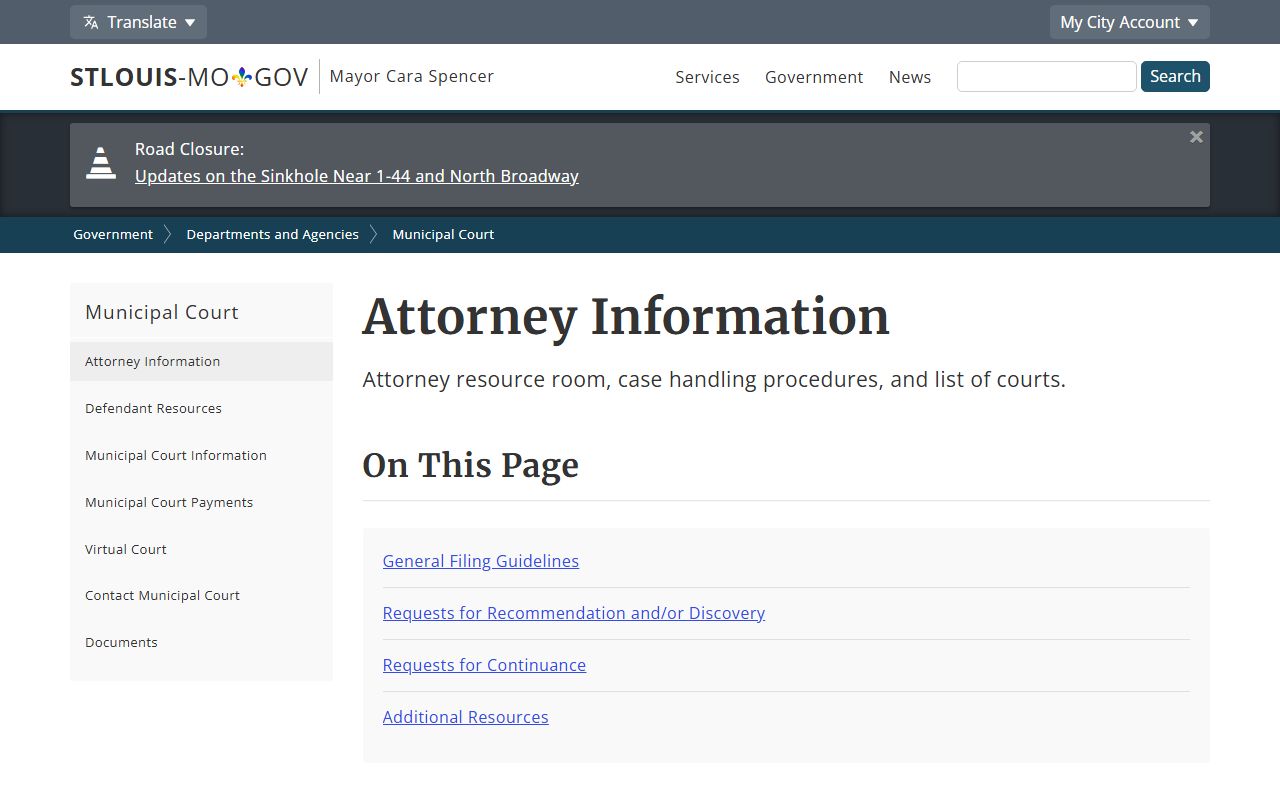
It also warns against waiting until a case goes to warrant before seeking recall.
Traffic Court vs Driver Records
A St. Louis City traffic court record and a Missouri driver record serve different purposes. The court record shows the municipal or circuit case. The Missouri Department of Revenue driver record shows license history, driver record entries, points, suspensions, and related state driver data. A certified court record does not replace a DOR driver record, and a DOR record does not replace the court case file.
| Record Type | Source | What It Shows | How to Access or Correct |
|---|---|---|---|
| Court traffic record | Case.net / St. Louis City Municipal Court | Citation, charge, court date, plea, disposition, fine, costs, warrant, and payment entries. | Use Case.net, Municipal Court, or Circuit Clerk copy channels for court documents. |
| Missouri driver record | Missouri Department of Revenue | License history, driver record entries, points, and suspensions where applicable. | Request through DOR and correct errors through the state driver record process. |
The Missouri DOR driver records page lists online, in-person, mail, email, and fax request routes. A driver record costs $2.82, and a license office purchase adds a $2 office processing fee. Fax costs are $0.50 per page. For someone else's record, Form 4681 needs the record holder's signature and notary, and DPPA limits access to personal driver information.
The DOR driver records source shows the state process that is separate from the municipal traffic case file.
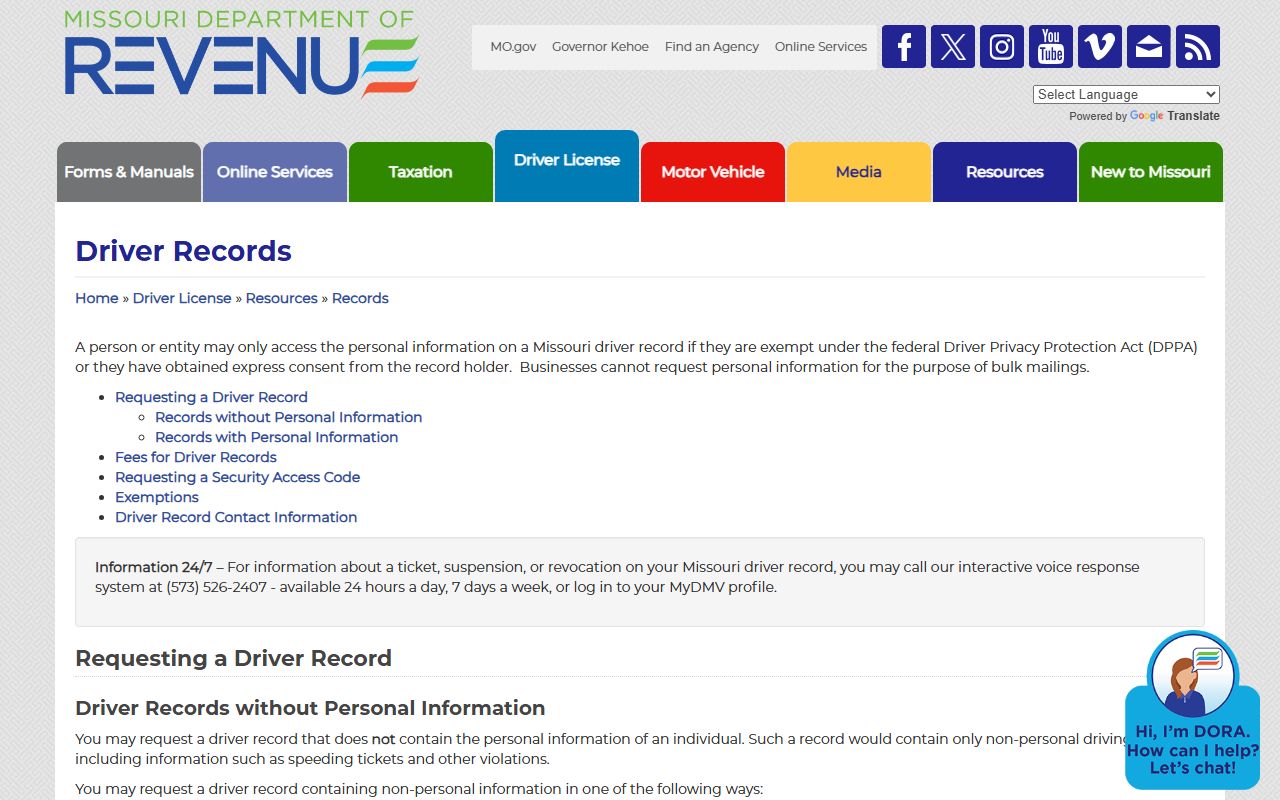
The DOR page is the better source when the user needs license history or point information rather than the ticket docket.
Missouri Vehicle Records
Some traffic-related searches are not court files or driver histories. Vehicle title, motor vehicle record, and other state vehicle questions go through Missouri DOR motor vehicle channels. These records can matter after a crash, towing issue, ownership dispute, or insurance question, but they do not show the municipal court's plea, disposition, or fine history.
The Missouri motor vehicle records page is the state contact point for vehicle records. Use the court case for ticket status. Use the driver record page for license history. Use the motor vehicle records page for vehicle record questions.
The state motor vehicle records source helps separate vehicle file requests from St. Louis City traffic court records.
That distinction keeps court payment issues from being sent to the wrong state records unit.
St. Louis City Traffic Warrant Issues
Failure to appear can produce a municipal bench warrant. The warrant recall rules for St. Louis City include a one-time hardship recall without cash bond if the person appears at Municipal Court customer service with photo ID and has not already received a prior cancellation on that case. If hardship recall is not available, the court lists $50 per case, capped at $200 for multiple cases, unless a judge set a higher amount. A special issues docket may be available for people unable to post bond.
CDL and commercial driver issues should be handled with extra care because a court disposition may affect licensing and employment through state driver records. The research did not confirm a St. Louis City-specific CDL diversion program, so the safer path is to check the municipal case, the DOR driver record, and any employer or federal commercial-driver reporting concerns before paying or pleading.
DWI and DUI matters can move beyond a routine traffic citation. When the case is filed as a state criminal matter, the full case file belongs with the criminal court record rather than the traffic payment screen. For the broader case record, use St. Louis City criminal court records.
St. Louis City Traffic Public Access
Public access to St. Louis City traffic court records follows Missouri court access rules and Sunshine Law limits. RSMo 610.010 defines public records and public governmental bodies. RSMo 610.023 requires public governmental bodies to make records available and designate a custodian. Court records remain subject to court rules, sealing orders, redaction duties, and expungement law.
Arrest and law-enforcement records are different from a traffic case docket. RSMo 610.100 governs law-enforcement arrest reports, incident reports, and investigative records. A crash report, police incident report, or investigative file may need a city agency request rather than a Municipal Court case lookup.
Key point: A public St. Louis City traffic docket may omit personal identifiers, sealed records, juvenile details, and protected information.
St. Louis City Traffic Fees
The research did not provide a complete Municipal Court copy-fee schedule, so traffic court copy costs should be confirmed with Municipal Court or the Circuit Clerk when a certified copy is needed. State driver record fees are published by the Missouri Department of Revenue. Payment vendor fees can also apply depending on the payment path.
| Item | Amount or Rule |
|---|---|
| Municipal traffic fine or court costs | Depends on the citation and court entry. |
| Municipal Court copy or certified copy | Confirm with the court before ordering. |
| Missouri DOR driver record | $2.82 per driver record. |
| License office processing | $2 office processing fee if purchased at a license office. |
| Fax fee for DOR record | $0.50 per page. |
The Corrections payment vendor source appears in the research as a city payment vendor reference.

Use that source only for the payment context it supports; it does not replace the Municipal Court ticket payment instructions.
St. Louis City Traffic Expungement
Traffic-related records may be limited only when Missouri law and the court record allow it. RSMo 610.105 closes certain criminal records after nolle prosequi, dismissal, or acquittal. RSMo 610.122 addresses qualifying arrest record expungement, and RSMo 610.140 addresses eligible criminal conviction expungement after statutory requirements.
Expungement is filed in court. It is not done by asking Case.net, DOR, or a payment vendor to delete a result. The person must identify eligible cases, file the correct petition, serve required agencies, and wait for court action. If granted, public access is limited. Not every traffic or DWI-related case qualifies.
Note: Defensive driving, diversion, amendment, or dismissal may affect a court record differently from a state driver record.